
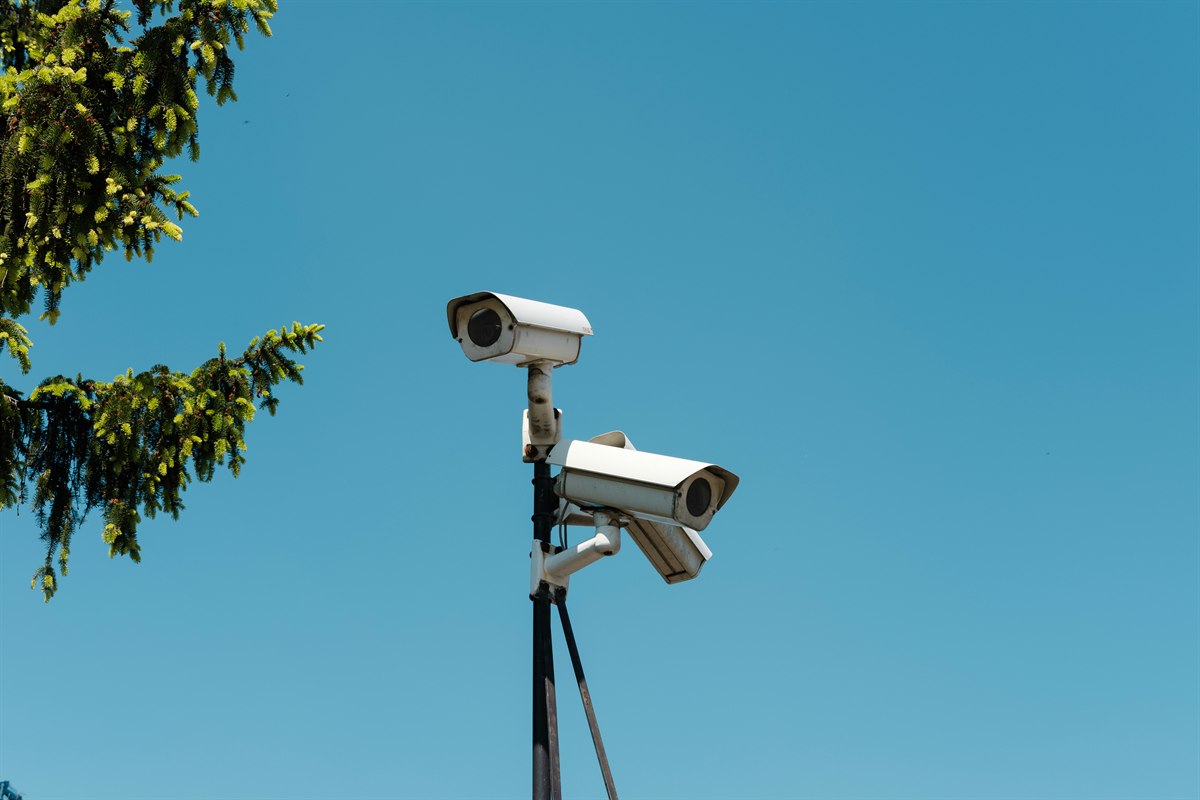
You installed a home CCTV camera for security, but it faces outside or captures the public road. Does that breach the Personal Data Protection Act (PDPA)?
General legal knowledge
Today many homeowners install closed-circuit television (CCTV) cameras to protect life and property, whether to prevent theft, to keep watch for strangers, or to record events that may occur in front of the house. However, because a CCTV camera can record public areas, the road, the pavement or even a neighbour’s home, the question arises whether installing a camera this way breaches the Personal Data Protection Act B.E. 2562 (2019) (PDPA).
Is CCTV Footage Personal Data?
The Personal Data Protection Act B.E. 2562 (2019) defines “personal data” as information about a person that enables that person to be identified, whether directly or indirectly. In the case of CCTV, if the recorded footage shows a face, a body shape, clothing or other information that makes it possible to identify a person, that footage is personal data under the PDPA.
Does Installing CCTV at Home Fall Under the PDPA?
An important point that many people do not know is that Section 4(1) of the Personal Data Protection Act B.E. 2562 (2019) provides an exemption for the collection, use or disclosure of personal data by a natural person for personal benefit or for household activities.
Therefore, if a homeowner installs CCTV to protect the home and family members, with no commercial or business purpose, that activity may in principle be exempt and outside the scope of the PDPA. However, this exemption does not mean that a homeowner may record other people without any limits, because the privacy rights of others under the law must still be considered.
Is It Illegal to Point the Camera Outside the Home or Capture the Street?
The PDPA does not expressly prohibit pointing a CCTV camera outside the home or recording the public road. In practice, a security camera often has to cover the entrance, the fence, the front of the house or the surrounding area, and it may be unavoidable that it records the street or people passing by. The key issue, however, is the “necessity and proportionality” of the data collection. If the camera angle is designed mainly to watch over one’s own property, and the recording of public areas goes no further than what is necessary for security, there is a stronger justification than where the camera is set up mainly to record the activities of other people.
On the other hand, if a camera is set to look into a neighbour’s house, a bedroom window, a private area, or a place where a person would reasonably expect privacy, that conduct may give rise to a legal dispute, even if it is not directly an offence under the PDPA.
How Homeowners Can Install Cameras to Reduce Legal Risk
To avoid disputes about privacy rights, a homeowner should install cameras so that they record only the homeowner’s own area as far as possible. Avoid pointing the camera at other people’s private areas unnecessarily, and limit the camera’s field of view to match the security purpose. In addition, if CCTV data is stored or disclosed in a way that goes beyond personal or household use, further obligations under the PDPA may need to be considered, such as the lawful basis for processing personal data, the retention period, and data security measures.
Summary
Pointing a CCTV camera outside the home, or having a camera angle that can record the public road, is not automatically an offence under the Personal Data Protection Act B.E. 2562 (2019), because the law does not directly prohibit it, and installing cameras for security at home may be exempt under Section 4(1) of the Act.
Even so, homeowners should keep in mind the principles of necessity and proportionality in collecting data, avoid recording other people’s private areas unnecessarily, and use the recorded data only for security purposes, because legal risk usually arises from using or disclosing the footage beyond a reasonable scope, more than from the mere installation of a CCTV camera.
Get Legal Advice
Tel: 02-312-3789, 085-111-9997
Email: lawyer@bangkokbusinesslaw.com
LINE OA: @bangkokbusiness
Website: bangkokbusinesslaw